
Professor Λεμφαδενικός καθαρισμός τραχήλου είναι μια εξειδικευμένη χειρουργική επέμβαση που στοχεύει στην αφαίρεση λεμφαδένων του τραχήλου, με απόλυτο σεβασμό στη διατήρηση των ζωτικών αγγείων και νεύρων της περιοχής.
Η επέμβαση πραγματοποιείται για την αφαίρεση πιθανών ή επιβεβαιωμένων λεμφαδενικών μεταστάσεων ενός καρκινώματος του θυρεοειδούς, αλλά και άλλων οργάνων, όπως η παρωτίδα, ο λάρυγγας και ο φάρυγγας.
Types of lymph node cleansing
Η επέμβαση διακρίνεται σε κεντρικό and πλάγιο λεμφαδενικό καθαρισμό.
Central lymph node dissection
Αφορά την αφαίρεση λεμφαδένων τραχήλου που βρίσκονται κοντά και κάτω από τον θυρεοειδή αδένα και την τραχεία. Η επέμβαση πραγματοποιείται μέσω της ίδιας τομής που χρησιμοποιείται για τη thyroidectomy.
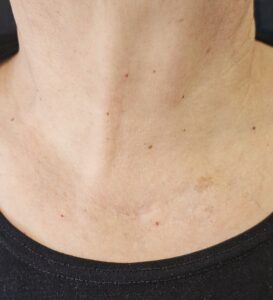
Ασθενής έπειτα από πλαστική τομή Θυρεοειδεκτομής με άριστο αισθητικό αποτέλεσμα
Professor χειρουργός σε μία εξειδικευμένη χειρουργική προσέγγιση θα πρέπει να προσέξει:
The recurrent laryngeal nerve
The inferior parathyroid glands
Lateral lymph node dissection
Αυτή η επέμβαση είναι ιδιαίτερα συχνή σε περιπτώσεις καρκίνου του λάρυγγα και της παρωτίδας. Αντίθετα, στον καρκίνο του θυρεοειδούς οι πλάγιες τραχηλικές μεταστάσεις είναι σπάνιες, με εξαίρεση το μυελοειδές καρκίνωμα.
Important anatomical structures that need protection:
Στα πλάγια τραχηλικά επίπεδα εντοπίζονται κρίσιμα αγγεία και νεύρα: έσω & έξω καρωτίδα, έσω & έξω σφαγίτιδα φλέβα, πνευμονογαστρικό, υπογλώσσιο & παραπληρωματικό νεύρο, στέρνοκλειδομαστοειδής μυς.
Η καλή γνώση της ανατομίας και η εμπειρία του χειρουργού είναι απαραίτητες για την ασφαλή εκτέλεση της επέμβασης και ένα άριστο αισθητικό αποτέλεσμα μετεγχειρητικά.
Εξειδικευμένη χειρουργική προσέγγιση του κ. Ψυχογιού
Professor Mr. Psychogios είναι εξειδικευμένος χειρουργός τραχήλου, με μεγάλη εμπειρία όχι μόνο στον κεντρικό αλλά και στον πλάγιο τραχηλικό λεμφαδενικό καθαρισμό, ο οποίος αποτελεί συχνή ένδειξη σε επεμβάσεις καρκίνου του λάρυγγα και της parotid.
Χρησιμοποιεί προηγμένη τεχνολογία κατά τη διάρκεια της επέμβασης:
- Optical magnification for increased accuracy
- Neuromonitoring to safely preserve vital nerves, such as the hypoglossal, paraplegic, and vagus nerves
- Parathyroid gland camera in central lymph node dissection
